


The Edmonton Roxy Theatre is a beloved venue, renowned for its unique performances and cultural significance. Originally operating as a cinema, it later evolved into a space for live performances. Discover the history of Roxy’s creation and development below in this edmonton-trend article.
The History of the Roxy Theatre
The decision to construct the Roxy Theatre was made in July 1938, with $40,000 allocated for its construction. The Roxy officially opened its doors to the public on October 12, 1938, located on 124th Street.
Upon opening, it was declared Edmonton’s most modern and beautiful theatre. The venue quickly became a popular entertainment hub for residents of the Westmount area. Designed by renowned architect William Blakely, the Roxy was a prime example of modernist style in Edmonton. Blakely’s seamless blend of white plaster with polished black stone received high praise from citizens and city officials alike. The Edmonton Bulletin lauded his work, noting how the building’s elements harmonized perfectly.
The theatre’s eye-catching neon sign complemented its white facade, black trim, and glossy finishes. Inside, it featured modern amenities, including well-lit foyers, air conditioning, and seats positioned to provide excellent views of the screen. The Roxy was built for comfort and enjoyment, designed to offer an exceptional experience to its patrons.
One unique feature was the recessed entrance, which allowed much of the front facade to be utilized as commercial space. The first tenant, Merrick Pharmacy, installed soda fountains outside the theatre, attracting considerable foot traffic and boosting its popularity.
The first film shown at Roxy was Mad About Music, a musical about a girl at a Swiss boarding school.
From 1938, Roxy operated as a cinema under two owners, Bill Wilson and Odeon (Suburban) Theatres. In 1941, it was leased to Odeon Theatres of Canada, continuing its role as a movie venue.
Decline and Revival
In 1970, the Roxy underwent significant renovations. The entrance was moved to the street, commercial spaces were removed, and the lobby was expanded. However, many of its modernist elements were lost, including the rounded corners, black tiles, and detailed plasterwork.
After these changes, the theatre’s management and programming shifted. In 1989, Nancy Power, a prominent Edmonton businesswoman, transformed the Roxy into a live theatre venue.
With sloped wooden floors, excellent acoustics, and a spacious lobby, the Roxy became a hub for live theatrical performances, featuring some of Edmonton’s finest actors.
The theatre thrived until a tragic event in 2015. On January 13, a fire of unknown origin destroyed the building, leaving the site vacant for over six years.
In 2019, plans for a new Roxy Theatre were initiated. The project faced delays, but in 2022, the theatre reopened.
The New Roxy Theatre
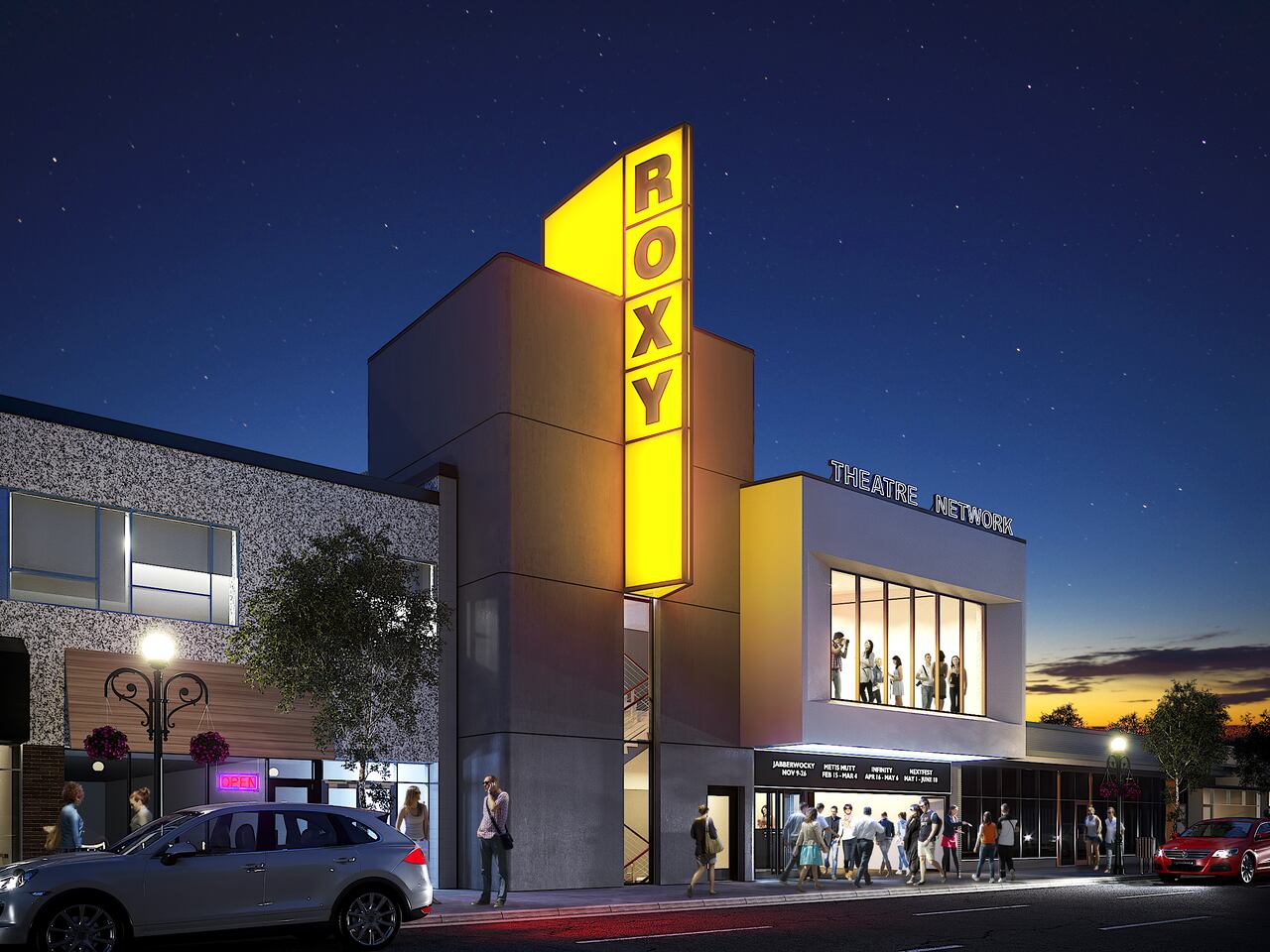
The new Roxy was built on the site of the original theatre, with construction costing over $12 million. The new facility features two theatres: the Roxy Theatre and the Nancy Power Theatre. Additionally, the building includes a rehearsal hall and a rooftop venue. Significant efforts were made to preserve the essence of the original theatre.
The modern Roxy boasts four performance spaces, continuing its legacy as a cherished cultural institution in Edmonton.